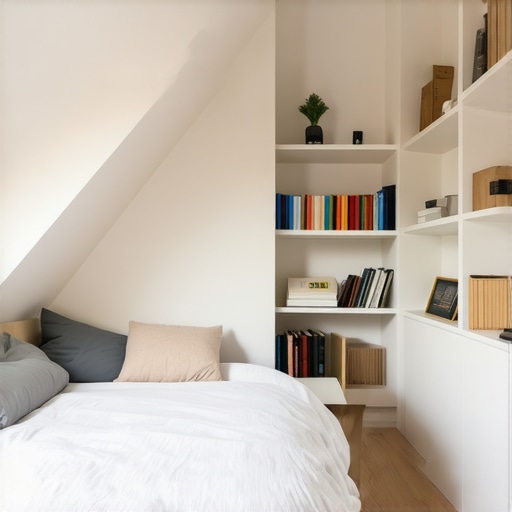
Ever found yourself stumbling over clutter in your bedroom, frustrated because those sloped ceilings seem to swallow up all your storage options? I remember the lightbulb moment during one particularly chaotic morning when I realized my bedroom was more cave than comfort. Those uneven ceilings, instead of adding charm, were turning into a real headache for my organization efforts. Do you feel the same way?
Why Tackling Sloped Ceilings Matters So Much
Revealing the Hidden Potential of Sloped Spaces
Sloped ceilings are often seen as a design challenge, but with the right approach, they can become a pivotal part of your home’s storage strategy. Instead of viewing them as a problem to hide, imagine transforming them into opportunity hubs for clever storage solutions. This shift in perspective is crucial, especially since optimizing every inch of your space can dramatically elevate your home’s functionality and aesthetic appeal.
Is it Really Worth the Effort to Hack Hidden Storage?
I used to think that tackling sloped ceilings was just a futile effort—until I made the mistake of DIY-ing a shelving unit that didn’t account for the slope. The end result? Wasted space and a wobbly shelf that came crashing down. Early on, I learned that the key to success is understanding the nuances of these tricky areas and investing in some smart, well-designed solutions. For more ideas, check out built-in storage tips for inspiring ways to declutter and elevate your space.
Today, I want to share how you can uncover the hidden potential of your sloped ceilings, turning what feels like a challenge into your home’s best feature. Ready to explore the secrets that helped me transform my bedroom? Let’s dive into the core hacks that can revolutionize your storage game.
Assess Your Space Thoroughly
Start by evaluating your bedroom’s unique ceiling angles and available wall areas. Use a measuring tape to record the dimensions of each slope and pinpoint accessible spots. For example, during my initial assessment, I noticed that the lower parts of the slopes could accommodate custom shelving, which opened up new storage opportunities. Document these measurements carefully to plan your solutions effectively.
Plan Your Custom Storage Solutions
Visualize how built-ins can maximize your space. Think of your ceiling slopes as natural frames for storage—like picture frames highlighting hidden treasures. Sketch out designs focusing on integrating shelves, cabinets, or drawers along the slopes. Use online room planners or digital tools for accuracy. For instance, I drew a plan that incorporated floating shelves on the lower slopes, which I later installed with adjustable brackets for flexibility.
Choose the Right Materials and Hardware
Select sturdy materials like plywood or MDF for your shelves, ensuring they can handle weight without sagging. Use metal brackets or steel supports similar to how engineers reinforce bridges—by distributing weight evenly. During my project, I opted for steel L-brackets because they offer extra strength and prevent wobbling, especially on angled surfaces. Also, consider scratch-resistant finishes for durability in accessible areas.
Construct and Install Built-ins with Precision
Cut your materials according to your measurements—remember, accuracy is key. Use a circular saw or a table saw, and clamp the pieces firmly to ensure clean cuts. When installing, place supports first, then attach shelves or cabinets. For slopes, I found that adjustable brackets were invaluable—they let me fine-tune the angle and level the shelves perfectly. As a tip, always double-check measurements before drilling to avoid costly mistakes.
Secure and Reinforce for Stability
Heavy items require reinforced mounting. Think of it like anchoring a sailboat—think big and secure tight. Use wall plugs suitable for your wall type (drywall, plaster, or masonry) and heavy-duty screws. I added extra studs behind the drywall where possible, securing the supports directly into the studs for maximum stability. For added safety, install support brackets underneath long shelves to prevent sagging over time.
Finish with Style and Function
Paint or stain your built-ins to match your decor, making them seamless with your room’s aesthetic. Clear finishes can showcase natural wood grain, adding warmth. During my renovation, I used a light gray stain that complemented the cool tones of my bedding, blending practicality with style. Incorporate soft-close mechanisms on doors and drawers for a polished touch and quiet operation.
Explore Inspirational Ideas for Seamless Integration
Look beyond basic shelves—consider hidden compartments or pull-out desks within the slopes. For more innovative ideas, visit creative built-ins to elevate your space. Remember, the key is customizing each element to fit your room’s unique architecture—don’t settle for off-the-shelf solutions when tailored options can truly maximize your space.
 }]}#}**When it comes to designing or renovating spaces with vanities, built-ins, and storage solutions, many homeowners and even seasoned designers fall prey to misconceptions that can lead to costly mistakes or underwhelming results. Let’s dig deeper into some of the most overlooked nuances and myths, backed by expert insights to elevate your understanding.
One widespread misconception is that all built-ins are created equal. In reality, the secret to seamless integration lies in understanding the subtle structural nuances, such as wall material, load-bearing capabilities, and existing framing—details that can make or break your installation. For instance, many assume drywall can support heavy countertops or fixtures, but studies show that improper anchoring into studs is a common culprit behind sagging vanities. To avoid this, exploring specialized reinforcement techniques is vital, especially in bathroom environments prone to moisture. For more advanced tips, check out steel reinforcement methods.
Another myth revolves around the supposed simplicity of vanity installation. Many believe that following standard DIY tutorials suffices, but nuanced details such as precise leveling, securing support brackets, and accommodating plumbing variances demand a more sophisticated approach. A small miscalculation can result in a wobbly, squeaky fixture or even structural damage over time. Incorporating professional-grade installation techniques can ensure durability and a sleek aesthetic, as detailed in comprehensive guides to vanity installation. Remember, rushing through installation without appreciating these intricate nuances often leads to ‘oops’ moments—like uneven surfaces or leaks—that compromise your space.
The curious question for advanced readers is: how does material selection impact long-term stability and maintenance of built-ins? While many default to MDF or particleboard because of cost and availability, expert insights reveal that engineered woods with moisture-resistant finishes significantly outperform traditional options in humid environments. This choice not only prolongs lifespan but also maintains a pristine appearance, reducing the need for frequent repairs. Studies indicate that investing in the right materials upfront can yield immense savings and peace of mind over years.
Finally, understanding the role of space planning nuances can unlock hidden potential in your storage. For example, integrating pull-out shelves or hidden compartments tailored to your specific needs maximizes usability while maintaining a clean aesthetic. For creative design ideas that blend form and function, explore creative built-in solutions. This level of customization is crucial because off-the-shelf units rarely fit perfectly into uniquely shaped or sloped spaces, and overlooking this fact can result in wasted real estate.
Are you falling into any of these traps? Recognizing and addressing these hidden nuances can dramatically enhance your home’s beauty and functionality. Share your experiences or questions in the comments—I’m here to help you navigate these advanced storage secrets!Maintaining your custom storage and vanity installations over time demands the right tools, consistent practices, and a strategic approach. During my projects, I’ve found that leveraging precision measurement and specialized hardware increases the longevity and performance of these spaces. For example, using a digital laser level ensures your shelves and cabinets stay perfectly aligned, preventing unwanted sagging or misfit over the years. Such accuracy not only lends a professional finish but also minimizes future repair needs, saving time and costs. Personal experience shows that investing in quality hardware—like heavy-duty steel brackets and corrosion-resistant fasteners—can make your built-ins withstand daily wear and tear much better. As trends evolve, I predict a shift toward incorporating smart monitoring sensors that alert you to structural shifts or moisture issues early. This proactive maintenance approach can extend your cabinetry’s lifespan significantly.
The Hardest Lesson I Learned About vanities, installation, built-ins, and storage solutions
One of the most eye-opening realizations was that precision really makes or breaks the whole project. Early on, I underestimated the importance of meticulous measurement, leading to misaligned shelves and unstable fixtures. Now, I always double-check my measurements and use laser levels to ensure everything aligns perfectly. This attention to detail saves time and resources in the long run.
Why Not All Storage Tools Are Created Equal
I discovered that investing in quality hardware, like heavy-duty steel brackets and moisture-resistant finishes, significantly enhances the durability of built-ins, especially in challenging spaces. Skimping on materials might save costs initially, but it often results in sagging shelves or damaged finishes that are costly to repair. Trusting premium supplies has transformed my approach to home improvement—less frustration, more satisfaction.
My Biggest Aha Moment About Space Optimization
Turning a sloped ceiling from a storage nightmare into a feature was about rethinking what those angles could offer. I learned that custom designs utilizing adjustable brackets and hidden compartments can optimize awkward spaces—think of them as secret extensions of your home’s personality. Embracing these layouts not only increases storage but also elevates aesthetic appeal, making me proud of every corner.
Where to Deepen Your Vanities and Storage Skills
For those eager to dive deeper, I recommend exploring resources like built-in storage ideas and creative built-in solutions. These offer practical insights and innovative techniques that have profoundly influenced my projects, turning challenging spaces into personalized masterpieces.
Light Your Path to Smarter Storage
Finally, embracing smart solutions—like motion-sensor lighting and moisture monitors—not only simplifies maintenance but also preserves the integrity of your built-ins over time. These innovations remind me that continuous learning and adaptation are key to maintaining a stylish, functional home. Don’t hesitate to experiment and tailor these ideas to fit your unique bedroom space. What’s been your biggest challenge with sloped ceilings? Share your experience below—I’d love to hear how you’re turning obstacles into opportunities.
Related Posts
Stop Bedroom Closet Sag with Reinforced 2026 Hanging Rods
I remember the moment vividly—standing in my cluttered bedroom, clothes…
7 Closet Built-in Fixes for Deep 2026 Bedroom Storage Corners
Have you ever stood in your bedroom, staring at that…