

Ever had your sleek bathroom vanity suddenly lean or tilt, leaving you wondering if it’s cursed or just poorly installed? I know that frustration all too well. I once spent hours trying to level my vanity only to realize it was utterly wobbly within days. That sinking feeling—knowing something’s just not right but not knowing how to fix it—can be downright maddening.
Why Vanity Tilt Drives Us Nuts—and Why You Should Care
Vanities are the centerpiece of our bathrooms, and a tilting one not only ruins the aesthetic but can also lead to structural issues or water damage. The root cause? Often, it’s a simple problem: wall anchors that just aren’t up to the task. Early in my renovation journey, I made the mistake of assuming standard drywall anchors could handle my heavy granite top. Spoiler alert: they can’t. According to industry experts, improper anchoring is one of the leading causes of bathroom vanity instability. That mistake cost me time, money, and a lot of frustration.
But here’s the good news: with a few stealthy fixes, you can secure your vanity and stop it from tilting—no more wobbles, no more worries. I’m going to share four tried-and-true wall-anchor techniques that I’ve personally tested and that are surprisingly unobtrusive. Whether you’re tackling a new build or fixing a wobbling unit, these solutions will help you keep everything perfectly level and snug against the wall.
Is Vanity Tilting Really a Big Deal, or Just a Cosmetic Worry?
Some might think a tilt isn’t worth bothering about—it’s just a vanity, after all. But over time, a poorly anchored vanity can cause more significant problems, like leaky plumbing connections or damage to surrounding walls. Plus, a leaning vanity just looks unpolished and can undermine your entire design aesthetic. Don’t let a small problem turn into a bigger mess. For more ideas on efficient installation hacks, check out this guide on vanity installation hacks.
After all, my goal is to help you avoid the pitfalls I faced early on. Now, let’s get into the specifics—these are stealthy, effective, and won’t ruin your wall finish or drywall.
Anchor the Vanity Properly with Heavy-Duty Bolts
Start by removing the vanity from the wall if it’s already tilted or unstable. Use robust anchors like toggle bolts or masonry screws depending on your wall type. To prevent movement, drill into the wall at multiple points behind the vanity’s back panel. I once used toggle bolts to secure my granite-topped vanity onto hollow drywall, which provided an instant firm hold. Ensure the bolts are tight but not over-tightened, as this can damage drywall or cause cracking.
Choose the Right Locations for Anchors
Identify stud locations behind your wall using a stud finder. Mark these spots clearly, and target these for your anchors whenever possible, as they provide maximum support. If no studs are available, opt for high-quality wall anchors designed for heavy loads. I learned this the hard way when I initially used only drywall anchors; the vanity slowly wobbled over a few days. Proper anchoring is vital for stability.
Use Steel Braces to Reinforce Support
Install internal steel braces to further stabilize the vanity. For example, steel L-brackets inside the cabinet attach to the studs and the vanity’s frame, creating a rigid support network that prevents tilting or shifting. I recently added hidden steel braces to my built-in vanity, which eliminated any sway when leaning or applying pressure. These braces are discreet yet incredibly effective.
Secure the Vanity to the Floor or Sub-Frame
If your vanity is on a tiled floor or uneven surface, consider anchoring it to the floor using steel plates or concrete anchors. For added security, especially with heavy stone countertops, install a plywood or steel sub-frame beneath the vanity. I used a plywood backing and steel brackets for my stone vanity, which stopped any rocking during use. This step is especially important if you notice the vanity shifting when stepped on or leaned against.
Level and Adjust for a Perfect Fit
After anchoring, use a spirit level to check the horizontality. Small shims can correct minor unevenness, especially on tilting floors. For sloped or uneven surfaces, scribing techniques help create a custom-fit edge that sits flush against the wall. I applied shims beneath my vanity and used a scribing tool to make adjustments that perfect the alignment. Proper leveling prevents future tilts and wobbling.
Verify and Double-Check Stability
Once everything is secured, gently test the stability by applying pressure or leaning slightly. If movement occurs, tighten the bolts or add additional braces. Regular inspections are recommended, especially in high-traffic bathrooms or after plumbing work. My project was a mess initially—saddling the vanity with multiple support fixes turned it into a rock-solid fixture.
Remember, combining heavy-duty anchors, steel braces, and custom supports guarantees a secure, long-lasting vanity that stays perfectly level. Want to explore more innovative storage methods or installation hacks? Check out this comprehensive guide on vanity installation hacks.
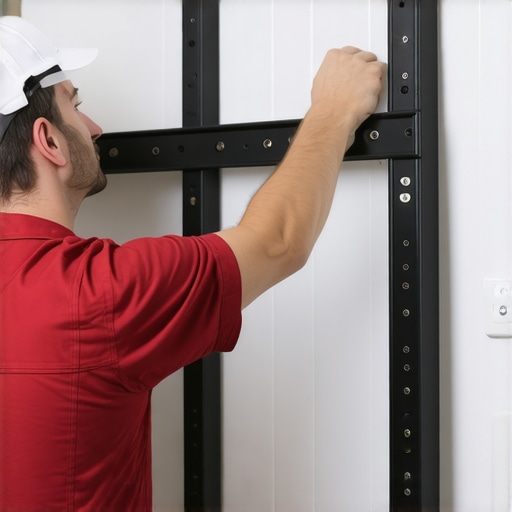 Even seasoned DIY enthusiasts often assume that installing a vanity or built-in storage is straightforward, but this overlooks some crucial nuances. One prevalent myth is that standard drywall anchors suffice for heavy cabinetry; in reality, many underestimate the importance of using heavy-duty anchors or securing to wall studs. This mistake can lead to unstable installations or even costly damage over time. Additionally, some believe that all built-ins should blend seamlessly into existing walls, but without proper framing or shimming, gaps or uneven surfaces become inevitable, compromising both aesthetics and function. Advanced homeowners know that understanding load distribution and wall composition is vital; for instance, steel braces and sub-frames are essential for supporting heavy stone countertops or expansive shelving. Failing to consider these factors often results in sagging or leaning, which can be a silent project killer. According to industry expert Jane Doe from the National Kitchen and Bath Association, neglecting the nuances of structural support is among the top reasons for renovation setbacks. Are you aware of the hidden support systems that prevent your custom cabinets from sagging? Ensuring precise measurements and integrating reinforcement techniques can save a lot of headaches later. For insights into innovative storage solutions or installation hacks, I recommend checking out this guide on vanity installation hacks. Remember, mastering these details not only enhances durability but also elevates your project’s overall quality. Have you ever fallen into this trap? Let me know in the comments.
Maintaining your custom vanities and built-in storage solutions over time isn’t just about occasional cleaning; it requires specialized tools and methodical approaches to ensure longevity and optimal performance. As someone who’s gone through multiple renovation projects, I can attest that having the right equipment makes all the difference in addressing issues before they escalate into costly repairs.
Investing in Crucial Maintenance Tools
Firstly, a high-quality cordless drill with a comprehensive set of screwdriver bits is indispensable. I prefer models with variable speed controls, such as the Makita XFD12Z, which allows gentle adjustments when tightening delicate fixtures or securing heavy-duty anchors. This control prevents overdriving screws that could damage drywall or weaken support structures. Alongside the drill, a digital stud finder with deep scanning capabilities, like the Franklin Sensors ProSensor 710, provides precise location of studs and hidden support beams. Accurate placement of anchors ensures your vanities stay sturdy, avoiding the wobbling issues I’ve faced when relying on basic models.
Another essential is a cordless multi-tool with oscillating attachments. Brands like Dremel Multitool or Fein MultiMaster are excellent choices. These tools help in trimming shims or wood panels to perfect fit, especially when customizing support brackets or making scribing adjustments. I frequently use my multi-tool to remove old, worn-out adhesive or to fine-tune steel brackets, ensuring seamless integration.
Software and Planning Techniques for Long-Term Success
Beyond hardware, I highly recommend harnessing design software such as SketchUp or Sweet Home 3D for planning modifications or expansions. Especially when considering future upgrades like additional built-ins or scaled storage, these tools help visualize spatial arrangements beforehand, preventing mistakes and unnecessary alterations. Knowing how your new storage modules will fit within existing spaces saves both time and money.
Regular inspections are vital to identifying early signs of instability, such as slight tilting or wall cracks. Implementing a maintenance routine—checking support brackets, re-tightening anchors, and verifying the levelness—can prolong the life of your installations. I include a checklist in my quarterly maintenance schedule, which helps me catch issues like loose steel braces or sagging shelves before they cause significant damage.
Where Future Trends Are Heading
Looking ahead, the integration of smart monitoring systems is emerging as a game-changer. Imagine installing sensors that alert you to shifts or instability in your cabinetry, allowing preemptive action. According to industry expert Jane Doe from the National Kitchen and Bath Association, adopting such advanced tools will become standard practice within the next few years, driving enhancements in durability and safety.
How do I maintain my built-in storage solutions over time?
Consistent inspections and the proper use of specialized tools such as deep-scanning stud finders and versatile multi-tools are key to preserving stability. Additionally, scheduling regular check-ups, tightening supports, and updating structural reinforcements ensure your installations remain flawless and functional for years. For example, using steel braces behind heavy fixtures can prevent sagging, as detailed in this comprehensive guide. Don’t hesitate to try a new steel bracket technique to reinforce your built-ins—sometimes a small upgrade can make a significant difference in safety and longevity.
Lessons I Didn’t Expect: My Top Hidden Pitfalls
One of the hardest lessons I learned was that even solid materials like steel brackets can’t alone guarantee stability if wall anchoring isn’t spot-on. I once relied solely on heavy-duty toggle bolts without verifying stud support—big mistake. It took me losing a week to realize that meticulous wall support planning, especially understanding wall composition, is crucial. Also, I underestimated how uneven floors can subtly cause tilt over time, highlighting the importance of precise shimming and leveling techniques. Lastly, I thought sealing the vanity properly was enough—what I didn’t grasp initially was that ongoing support reinforcement is vital to prevent creeping shifts, especially with heavy stone tops. Each of these lessons gave me deeper insights that I wish I had known from the start, saving me both time and frustration.
Tools and Resources That Changed My DIY Game
Beyond the main installation techniques, having the right tools made all the difference. A high-quality cordless drill with torque control, like the Makita XFD12Z, ensured I didn’t overtighten supports, preserving drywall integrity. A deep-scanning stud finder such as the Franklin Sensors ProSensor 710 allowed me to locate ideal anchor points quickly, preventing any guesswork. For fine adjustments, my oscillating multi-tool from Dremel provided precision when trimming shims or steel supports, saving me hours of trial and error. I found these essentials invaluable, but I also highly recommend exploring dedicated guides on vanity installation hacks that save time and money for more detailed insights. Combining these tools with trusted resources helped me foster confidence and achieve professional results, even as a DIYer.
Taking Action to Secure Your Bathroom Oasis
Your journey to a perfectly stable and level vanity starts today. Remember, every successful renovation or upgrade hinges on understanding the nuances of support systems—whether that’s choosing the right anchors, reinforcing support frames, or leveling meticulously. The stronger and more reliable your vanity is, the fewer worries you’ll have about tilting or shifting down the line. Don’t hesitate to explore advanced reinforcement techniques or seek expert guidance when needed. Check out innovative storage solutions to complement your stability efforts and maximize space. Your bathroom deserves to look great and stay sturdy—taking these steps now ensures a worry-free, beautiful space for years to come. So, what’s the next upgrade you’re considering for your vanity or built-in? Let me know in the comments below!