

I remember the exact moment moments ago when I stepped into my bathroom and noticed my floating vanity teetering slightly to one side. That sinking feeling hit me harder than a dropped glass of water. It’s unsettling, right? Once, I dismissed it as a minor wobble, but over time, it became a persistent annoyance. It wasn’t long before I realized that this tilting could lead to serious damage or even a complete collapse if not addressed properly. Trust me, I’ve been there.
Struggling with a Wobbly Vanity? You’re Not Alone
When I first installed my floating vanity, I was so excited about its sleek, modern look. However, several months later, uneven floors and subpar mounting methods made it wobble ominously. That wobble wasn’t just a visual issue; it was a sign of a deeper problem—lack of proper reinforcement. It’s easy to overlook the importance of sturdy support, especially with floating designs that appear minimalist. But ignoring this can result in a sagging, unstable fixture that ruins your bathroom’s aesthetic and functionality.
The good news? There’s a simple, effective fix I discovered—and it’s all about steel plates. Installing a steel plate beneath your vanity can stabilize it, distribute weight evenly, and prevent tilting. I’ll walk you through how I did it, so you don’t have to suffer the same instability. Plus, I’ll share tips from expert installers that make the process straightforward and durable.
Before diving into the DIY, I want to emphasize that understanding the root cause of your vanity’s tilt is crucial. Could it be uneven floors, weak mounting, or insufficient support? Identifying the cause will help you choose the right fix. And if you’re curious, you can explore current trends in vanity designs that incorporate steel reinforcement for extra durability—trust me, it’s worth considering for your next renovation or update.
Now, let’s get into the core of the repair—how a steel plate can transform your wobbling vanity into a steadfast fixture. But before that, I’ll address some common concerns—like whether this fix is really effective or just a temporary bandage.
Secure Your Vanity with Steel Plates
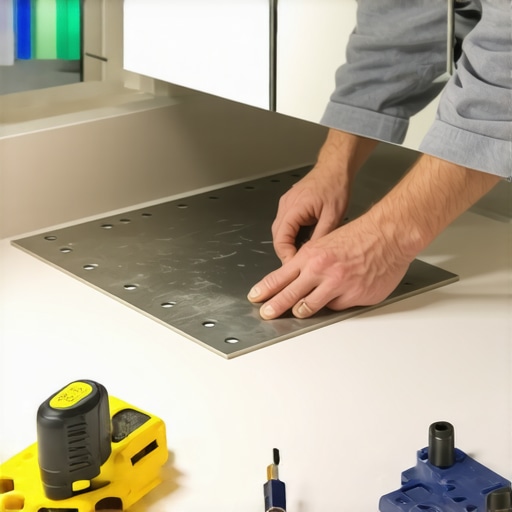
Begin by removing everything from the vanity to work safely and see the full support area. I recall the messy but satisfying moment I laid out my tools—drill, steel plates, and fasteners—ready to fix that wobble. Place a sturdy steel plate beneath the vanity where the support needs reinforcement. Think of it as installing a backbone inside—a solid base that distributes weight evenly, preventing future tilts.
Measure and Cut the Steel Plate
Measure the width and depth of the space beneath your vanity—precision is key. Use these measurements to cut the steel plate to size, ensuring it fits snugly without protruding. Cutting steel might seem intimidating, but with a metal-cutting saw or grinder, it’s straightforward. Remember, safety glasses are a must during this step. This process is akin to tailoring a custom insert—perfect fit guarantees stability.
Prepare the Installation Site
Clean the area thoroughly, removing dust, debris, and any loose material. This snap-on step is like preparing a foundation before laying bricks—cleanliness ensures the support holds firmly. If your vanity is installed over tile, drilling through the tile is necessary—use a carbide-tipped drill bit to prevent cracking. Drilling into the wall or floor may also be needed to anchor the steel plate securely.
Attach the Steel Plate
Affix the steel plate to the wall or floor using heavy-duty anchors or bolts. Imagine mounting a new frame—tight and secure. Drilling and bolting might feel like a workout, but each turn of the wrench solidifies the support. For better dispersion of weight, I recommend anchoring both on the wall behind the vanity and beneath the base. This dual reinforcement acts like adding braces to a leaning ladder, ensuring it doesn’t sway.
Mount the Vanity onto the Reinforced Support
With the steel plate firmly in place, carefully position your vanity over the support. Screws or bolts can secure the vanity directly into the steel plate or into mounting brackets attached to it. Double-check for levelness—using a spirit level is crucial here. An uneven vanity will undo your work, so take your time—think of it as balancing a see-saw perfectly in the middle.
Final Checks for Stability
Once everything is secured, test the support by gently pressing down on the vanity. If it feels solid without wobbling, you’ve successfully reinforced it. A quick walk-through—checking all bolts and contacts—avoids surprises later. This reinforcement not only stabilizes the vanity but also extends its lifespan, saving you future repairs.
If you’re considering how this fix compares to other support methods, explore storage solutions that might benefit from added stability. Reinforcing now prevents issues in the future, especially with heavier fixtures or frequent use.
 While many believe they know everything about installing built-ins, vanities, and storage solutions, several nuanced misconceptions can sabotage your efforts. One widespread myth is that securing a vanity with simple wall anchors suffices. In reality, especially for heavy or custom pieces, relying solely on drywall anchors can lead to wobbling or even detachment over time. Experts emphasize the importance of secondary supports, like steel brackets or reinforced mounting frames, which you can learn more about in our guide on [hidden steel brackets for heavy-duty built-ins](https://customcabinetrypro.com/6-hidden-steel-brackets-for-heavy-duty-built-in-office-desks). Furthermore, many overlook the critical role of proper weight distribution during installation, which is essential to prevent sagging or tilting. Skipping level checks during the mounting process is a trap that can result in crooked or unstable fixtures. Advanced installers often use shims and steel plates to distribute weight evenly, ensuring longevity and stability. An additional common mistake is ignoring the impact of uneven floors or wall irregularities. This oversight can cause your installation to look perfect initially but fail prematurely. For complex scenarios, incorporating steel sub-frames or adjusting mounting angles gives a much more durable solution. Did you know that some professionals even use steel reinforcement behind tiled walls, as detailed in our article about [supporting massive quartz-top vanities](https://customcabinetrypro.com/the-hidden-sub-frame-move-for-supporting-massive-quartz-top-vanities)? Another myth is that aesthetic considerations should override structural integrity. While a sleek look is desirable, sacrificing support can lead to costly repairs later. Investing in reinforcement methods like steel support plates might seem more intensive upfront but provides peace of mind. For those planning to install floating vanities, understanding the significance of wall strength and proper anchoring can be the difference between a stable fixture and a dangerous fall. This nuance is often missed, leading to problems down the line. Additionally, some installers fail to account for the dynamic nature of environments—like humidity or shifting foundations—that can compromise poorly supported fixtures over time. Research indicates that steel reinforcements can absorb stresses caused by settling or temperature fluctuations, as outlined in structural support studies. Remember, every successful installation hinges on nuanced choices that prioritize durability. Before you start your next project, ask yourself: Are you relying on outdated myths or proven strategies? Let’s dig deeper into these subtleties—your future self will thank you. Have you ever fallen into this trap? Let me know in the comments or reach out through our [contact page](https://customcabinetrypro.com/contact-us) for personalized advice.
Keeping Your Bathroom Fixtures in Top Shape
Maintaining your bathroom vanities, built-ins, and storage solutions requires more than just periodic cleaning. To ensure long-term durability and aesthetic appeal, investing in the right tools and adopting effective methods is essential. Personally, I rely on specialized equipment like high-quality torque screwdrivers and precision levelers to keep everything aligned and secure. Using a digital laser level, for instance, guarantees that floating vanities stay perfectly straight over time, preventing those troublesome tilts that can develop from settling or minor shifts.
Another crucial tool is a cordless power drill equipped with various bits. It allows me to tighten mounting brackets and steel supports efficiently without risking damage, especially when working with delicate finishes or wall materials. For storage solutions, I recommend a magnetic bit holder; it keeps your bits organized and accessible during ongoing projects, saving time when installing or adjusting built-ins.
When it comes to cleaning and minor repairs, I swear by a set of microfiber cloths and a few gentle, multi-purpose cleaning sprays that won’t harm finishes. Regularly inspecting supporting hardware and applying a thread-locking compound to bolts can prevent loosening over time. This proactive approach extends the lifespan of your fixtures and averts costly repairs down the line.
How do I maintain my vanities and built-ins over time?
To keep your vanities working flawlessly, establish a routine of visual inspections every few months. Check for loose screws, wobbling supports, or signs of moisture damage—especially around plumbing access points. Address issues promptly; for instance, apply steel plate reinforcements or steel brackets in areas showing strain or cracking, referencing trusted techniques like those outlined in expert support articles. Additionally, scheduling periodic sealant reapplications around sinks and edges prevents water ingress, which could compromise support structures.
Looking ahead, the trend is moving toward smart maintenance kits that can diagnose support issues remotely, integrating sensors into built-ins for real-time feedback. These innovations promise even more reliable long-term performance, reducing downtime and repair costs.
If you want to take your maintenance game to the next level, try installing a small, portable magnetic sensor kit to monitor the stability of your most vulnerable fixtures regularly. It’s a small investment that can catch issues before they become visible problems.
Remember, ongoing maintenance isn’t just about fixing problems as they occur; it’s about adopting a proactive mindset to preserve the integrity of your fixtures. Using professional-grade tools and techniques—like secure steel supports, levelers, and moisture barriers—makes all the difference. For detailed guidance on reinforcing heavy fixtures, check out our step-by-step support reinforcement tutorials. Keep those fixtures sturdy and looking great for years to come!
The Hardest Lesson I Learned About Vanities and Built-ins
One of my most valuable lessons was realizing that no matter how sleek or modern a floating vanity appears, overlooking proper support can lead to failure over time. I once relied solely on wall anchors, only to find my vanity wobbling dangerously months later. It taught me that investing in steel support plates from the start saves headaches and long-term repairs.
Why Relying on Appearance Over Strength Can Cost You
For a while, I believed that a wall-mounted fixture’s aesthetic value outweighed its structural needs. That misconception almost resulted in a collapse. The lightbulb moment was understanding that beauty shouldn’t come at the expense of stability—steel reinforcement is an invisible hero that preserves both form and function.
Addressing Hidden Floor or Wall Flaws Upfront
I used to think that level floors or walls were prerequisites for a proper installation. But I learned to identify and compensate for uneven surfaces by incorporating steel brackets and sub-frames. This proactive approach prevented uneven support that could cause tilting or sagging over time.
Integrating Reinforcement Techniques Into Initial Planning
Adding steel plates and supports during the early stages of installation, rather than as a fix afterwards, drastically improved the durability of my built-ins. Engaging with tools like a digital laser level and steel cut-to-size helped me ensure precision. It’s essential—think of it as building a strong backbone rather than patching a shaky spine later.
Realization: Structural Support Is a Long-Term Investment
Your vanity or built-in isn’t just about immediate aesthetics; it’s about enduring strength. I discovered that reinforcing with steel improves longevity, resists environmental stresses, and maintains your bathroom’s beauty for years. Don’t underestimate the power of these support rigorously tested by professionals—it’s the secret sauce to hassle-free installations.