

I remember the moment clearly. After pouring hours into designing my dream closet, I finally mounted the first shelf only to realize it was leaning at an awkward angle. Turns out, mounting closet systems to sloped ceiling joists isn’t as straightforward as it seems—especially when you’re trying to avoid tearing into your finished ceiling or, worse, facing a wobbling mess every time you reach for your favorite hoodie. That lightbulb moment was both frustrating and enlightening, sparking a journey to find reliable methods that make this task manageable.
Why Custom Solutions Make Or Break Your Closet’s Functionality
If you’ve ever sagged under the weight of an improperly mounted closet system, you know how critical it is to get this right. Sloped ceilings add a unique challenge: they require more than just standard anchors or brackets. The uneven angles mean traditional mounting techniques can lead to instability, damage, or do-it-again headaches that drain your time and budget. The good news? With a bit of know-how—and the right approach—you can transform that tricky sloped space into a sleek, functional storage haven.
Question: Is Mounting Closet Systems on Sloped Ceilings Really That Difficult?
Trust me, I used to think it was nearly impossible without heavy machinery or professional help. My early attempts were full of mistakes—like placing anchors in the wrong spots, underestimating the weight, or ignoring the structural quirks of my ceiling. I learned the hard way that making assumptions about standard installation methods often leads to disaster. One mistake I made was ignoring the importance of structural reinforcements—something that even seasoned DIYers overlook. For a detailed overview of how to reinforce your mounted systems, check out this article. Now, I want to help you avoid those pitfalls and give you proven strategies to tackle your sloped ceiling project with confidence.
Getting past this initial hurdle is crucial because properly mounted closet systems don’t just look good—they stand the test of time and daily use. Are you ready to turn that challenging sloped ceiling into your home’s best feature? If so, let’s dive into the practical solutions that will make your space both beautiful and durable.
Assess the Ceiling and Plan Your Mounting Strategy
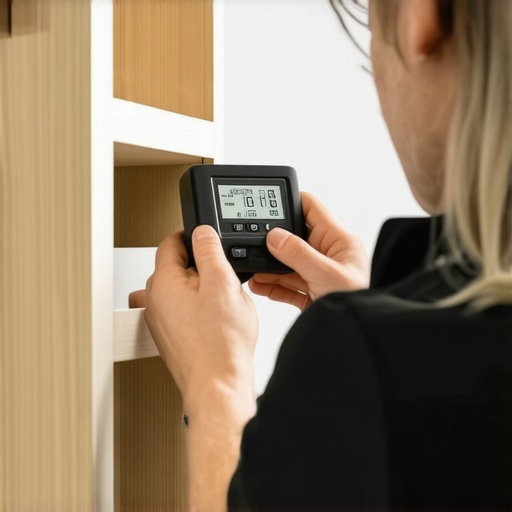
Start by measuring the slope angle of your ceiling using a digital angle finder or a simple protractor. For example, I once used a smartphone app to measure my ceiling’s angle, discovering it was 20 degrees. This step helps you determine where to place support brackets and how to cut mounting boards. Remember, the goal is to distribute weight evenly while accommodating the slope for stability.
Reinforce the Structural Support
Since your ceiling isn’t perfectly horizontal, reinforcing the mounting points is crucial. I drilled steel L-brackets into the ceiling joists at strategic points, mimicking the technique used in this article. These brackets act like strong anchors, preventing sagging or detachment later. Use a stud finder to locate joists accurately and avoid fragile drywall or plaster alone.
Use Adapted Mounting Boards or Cleats
Attach a level, sturdy board—like a 2×4 or plywood strip—across the ceiling support points, following the slope. Secure it with heavy-duty anchors suitable for your wall material, such as wedge anchors for concrete or toggle bolts for drywall. As I learned during my first attempt, omitting this step caused my shelf to tilt over months. The board acts as a platform for your closet system, distributing the load evenly and compensating for the slope.
Create Custom Supports for Your Closet System
Cut support cleats at an angle matching your ceiling slope, ensuring they sit flush against the ceiling. I used a circular saw with a bevel cut to match my 20-degree slope. Fasten these cleats into the reinforced brackets, creating a strong frame. Installing these at multiple points prevents lateral movement and keeps your system level and secure.
Attach the Closet System Components Carefully
With your support framework in place, mount your closet system components—shelves, rods, and cabinets—using appropriate hardware like steel anchors or specialized brackets. Double-check with a level at each stage, adjusting as needed. In my experience, using a laser level made the process smoother, eliminating guesswork and ensuring everything remained perfectly aligned despite the ceiling’s angle.
Test the Stability and Make Adjustments
Before fully loading shelves, gently test the robustness of your installation by applying force in different directions. If you notice any wobbling, reinforce those areas with additional brackets or thicker support boards. Remember, stability isn’t just about holding weight but maintaining safety and longevity over time.
When remodeling or designing built-ins, many homeowners and even DIY enthusiasts fall prey to common misconceptions that can compromise both aesthetic appeal and structural integrity. A prevalent myth is that standard mounting techniques suffice regardless of wall material, weight load, or environmental factors. However, in my professional experience, trusting generic solutions often leads to sagging, wobbling, or even costly repairs. For example, relying solely on plastic drywall anchors for heavy vanities can result in disastrous failure over time, especially in high-moisture areas—something professional installers understand deeply, emphasizing the importance of using steel anchors or specially designed backing supports. Additionally, there’s a misconception that wall-to-wall cabinetry needs no reinforcement when attached to studs; in reality, framing irregularities, wall gaping, or dynamic loads demand precise calculations and sometimes custom framing techniques for optimal stability. Picking the wrong materials or overlooking moisture barriers can also cause long-term damage, such as warping or mold growth, especially in bathrooms. Experts highlight the necessity of integrating proper sealants and vapor barriers—like the waterproof sealant rule for vanity-to-floor joints—to prevent water infiltration and decay. Moreover, many assume that once a vanity is mounted, maintenance requires minimal effort. In contrast, advanced users recognize that periodic reinforcements, adjusting support brackets, and applying protective finishes can extend the lifespan significantly. One common trap is underestimating the impact of environmental factors like humidity fluctuations, which can cause expansion or contraction in materials, leading to gaps or misalignment over time. Studies by the Building Science Corporation show that environmental control and appropriate material selection are paramount in maintaining the integrity of built-ins, especially in variable climates. As I’ve learned through years of experience, understanding these nuances isn’t just for perfectionists—it’s essential for longevity and safety. Are you aware of how subtle mistakes during installation could undermine your project? Share your experiences or questions—I’d love to hear. And for more detailed insights on designing and installing vanities, check out the expert tips to maximize your space, ensuring your investment remains both beautiful and durable.
Tools I Recommend for Long-Term Maintenance
Maintaining your custom-built storage solutions and vanities requires precision and reliable equipment. I swear by a quality cordless drill like the DeWalt DCD791D2 Flex Volt because its power and battery life make routine adjustments effortless, especially when tightening or loosening support brackets during periodic checks. Additionally, a digital angle finder, such as the Stabila Digital Level 37830, helps ensure that shelves and supports stay perfectly aligned over time, preventing gradual sagging or tilting. For cleaning and upkeep, a microfiber cloth paired with a gentle, pH-balanced cleaner like Method All-Purpose Cleaner keeps surfaces pristine without damaging finishes.
Planning for Longevity and Scaling
Investing in modular components and adjustable supports during installation pays off in the long run. For example, using steel stud anchors and heavy-duty brackets ensures your vanities and built-ins will hold up against daily use, especially if you consider expanding or reconfiguring your space later. As trends shift toward multi-functional spaces, choosing adaptable hardware and smart support frameworks now can save you time and money down the line.
What’s the Future of Maintenance in Custom Storage Solutions?
With the rise of smart home integrations, I predict a move toward IoT-enabled supports and sensors that monitor load stress and structural integrity in real-time. This technology could notify you via an app when a support needs reinforcement, preventing potential accidents or damage. Meanwhile, advancements in durable, self-healing materials might reduce the frequency of maintenance altogether. Staying ahead means regularly evaluating your setup with reliable tools—like my favorite digital angle finder—and being ready to incorporate new solutions as they become available.
How do I maintain my vanities and built-ins effectively over time?
Regular inspections are key. Check support brackets, adjusting or replacing them if you notice wobbling or creaks. Keep surfaces clean with gentle cleaners, and avoid harsh chemicals that can degrade finishes. Tighten any loose hardware, and consider adding anti-tip brackets to prevent shifting. Storage solutions, like adjustable shelving systems, should be reevaluated annually to ensure they accommodate your needs without stress on the supports. For detailed guidance on supporting heavy fixtures, explore my article on heavy-duty support fixes. Remember, a small investment in maintenance tools and routine checks guarantees your displays remain both functional and beautiful for years to come.
3 Surprising Truths I Discovered About Mounting Vanities and Built-ins on Sloped Ceilings
One of the biggest lessons I learned was that assumptions about standard mounting techniques can be your greatest setback. I once believed that simply anchoring into ceiling joists would suffice, but I quickly realized that uneven slopes demand customized solutions tailored to each space’s unique angles and structural quirks. Another insight was the importance of patience—rushing through measurements or skipping reinforcement steps will almost always lead to wobbling or instability later on. Finally, I found that embracing specialized tools—like digital angle finders and custom-cut supports—not only saves time but vastly improves the precision and durability of your installation.
My Gear for Perfect Support—And Why I Trust Them
Over the years, I’ve curated a toolkit that truly makes a difference when installing built-ins on sloped ceilings. The steel stud anchors are essential—they provide the strength needed to hold heavy vanity tops securely. A high-quality digital level ensures precise leveling, especially when conventional bubble levels fall short on angled surfaces. For cut precision, my scribing tools are game changers, enabling flush fits against uneven walls or ceilings. These tools together have helped me create built-ins that are not only stable but breathtakingly seamless—proof that quality gear makes a measurable difference.
Take Action and Elevate Your Spaces Today
If there’s a lesson I can pass along, it’s that meticulous planning combined with the right tools transforms a daunting project into a rewarding achievement. Don’t wait for perfect conditions—start small, measure diligently, and don’t hesitate to seek out expert advice when faced with tricky angles. Whether you’re aiming to add a sleek vanity over radiant-heat floors or install eye-catching built-ins in an uneven alcove, applying these insights will ensure your results are both beautiful and long-lasting. Remember, your space’s potential is limited only by your willingness to begin. Are you ready to turn that sloped ceiling into your next masterpiece? Share your plans or questions below, and let’s craft a space that truly reflects your style and needs.