It was a moment of quiet frustration in my home improvement journey when I realized that my beautiful new built-in shelves didn’t quite fit the sloped wall in my living room. The gap was glaring—no matter how much I tried to shimmy or sand, it just looked sloppy. That lightbulb moment hit hard: to truly create a seamless, polished look, I needed a tailored solution that acknowledged the wall’s unique angle. Have you ever faced a similar challenge with uneven or slanted walls throwing off your renovation plans? Well, you’re not alone—and there’s a smart way to take control of this tricky situation.
Why Scribing Built-ins to Sloped Walls Matters More Than You Think
In my experience, ignoring the irregularities of a sloped wall doesn’t just ruin the aesthetic—it can also affect the functionality of your built-ins. Standard measurements and templates often fall short because they assume perfect geometry, which isn’t the case in real homes. According to industry experts, custom scribing ensures a much neater finish and prevents gaps that collect dust or collect clutter—a common complaint among homeowners. It’s an investment in both beauty and practicality, whether you’re installing floating shelves, cabinets, or built-in vanities.
Is Scribing as Difficult as It Sounds?
Early on, I made the mistake of just trying to force regular cabinetry into the corner—trust me, it looked worse than my initial gaps. The real secret is understanding how to carefully mark and cut your pieces to follow the wall’s contour. With the right tools and some patience, it’s entirely doable. Want to see some proven techniques? I recommend exploring detailed guides like the expert advice on seamless built-in installations—it covers everything from sketching to final fitting.
Marking the Wall’s Contour Precisely
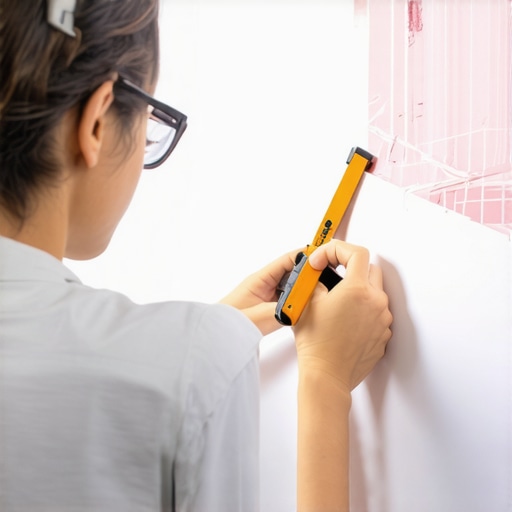
Start by placing your built-in piece against the wall, then use a flexible contour gauge to trace the exact outline of the sloped surface. During my project last month, using the contour gauge helped me capture even minor variations, preventing gaps and ensuring a snug fit. Be meticulous—small deviations can lead to uneven edges later.
Transferring the Shape to Your Material
Cut a piece of scrap material that matches your built-in’s thickness and width. Press it firmly against the wall, aligning the traced contour onto the scrap. Use a pencil or marker to trace the contour onto the scrap, ensuring all curves are accurately transferred. I found that double-checking each line before cutting saved me from costly mistakes.
Cutting the Profile Carefully
Use a fine-tooth saw or a jigsaw to cut along the traced lines. Take your time—rushing can lead to jagged edges. During my attempt, I initially tried to rush through with a jigsaw and ended up with a rough edge, which I had to sand down later. Patience here pays off. Consider using a sanding block or a rasp to smooth the edges afterward.
Fitting and Refining the Cut
Test the cut piece against the wall. It should conform tightly, leaving no visible gaps. If gaps appear, identify whether they’re due to minor inaccuracies, then gently sand or trim the profile as needed. To prevent over-trimming, make small adjustments and check the fit repeatedly—this iterative process ensures precision.
Securing the Scribed Piece in Place
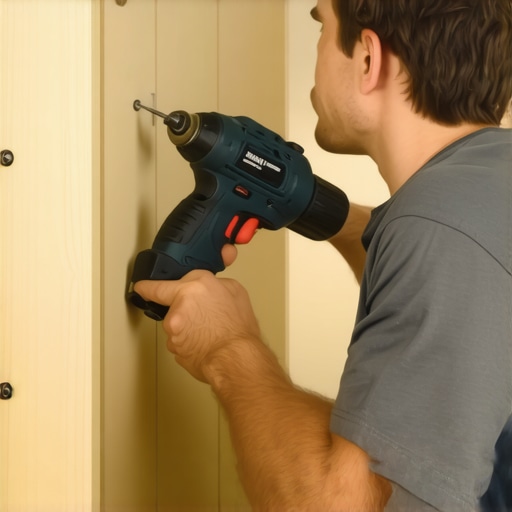
Once satisfied with the fit, proceed to install the built-in, anchoring it securely into framing or wall studs. Use appropriate fasteners, such as heavy-duty screws or brackets, especially when supporting significant weight. When I installed my shelves, adding steel wall ties at strategic points reinforced the stability and prevented wobbling, especially important over uneven surfaces. For detailed anchoring tips, check out these expert installation guides.
 Many well-meaning homeowners fall prey to misconceptions that hinder their project outcomes. One prevalent myth is that *standard measurements suffice for all spaces*—but in reality, every home boasts unique quirks that demand custom solutions. Relying solely on generic plans often results in gaps, uneven surfaces, and added frustration. Advanced professionals like myself emphasize the importance of **measuring wall contours precisely and tailoring each cut** to avoid these pitfalls. Another widespread mistake is neglecting **weight distribution when anchoring heavy built-ins**; overlooking this can lead to wobbly or even dangerous installations. For example, using improper fasteners or failing to locate wall studs can compromise stability. Always consider **stud locations and load-bearing points**—this attention to detail is what separates a temporary fix from a permanent, solid installation. Many assume that installing built-ins is straightforward, but **misjudging the structural requirements** can cause long-term issues like sagging or detachment. To truly master this craft, you must explore resources like innovative storage ideas and understand the advanced techniques that ensure durability. Furthermore, it’s critical to **plan for future modifications or repairs**—building your units with access panels or removable sections can save you time and money later. Remember, preciseness in measurement and planning is key; rushing or skipping steps almost always backfires. Have you ever fallen into this trap? Let me know in the comments. For more tips on **clicking with your space**, check out expert storage solutions that can elevate your project from average to outstanding.
Maintaining your custom built-ins and storage solutions is crucial to ensuring they serve you well for years to come. Over time, regular upkeep not only preserves their appearance but also prolongs their structural integrity. One of my favorite tools for ongoing maintenance is a high-quality multi-tool like the Oscillating Multi-Tool from Dremel. Its versatility allows me to gently sand, clean, or perform minor repairs without damaging the surrounding surfaces. Regular cleaning with a microfiber cloth and gentle wood or laminate cleaners prevents dust buildup and staining, which can degrade finishes over time.
Investing in specialized lubricants for hinges and sliding mechanisms keeps them operating smoothly. For example, a silicon-based spray can reduce squeaks and wear, ensuring drawers and doors open effortlessly. When addressing minor scratches or scuffs, I turn to wax sticks designed for furniture—these fill in imperfections seamlessly and help maintain a uniform look. Additionally, inspecting fasteners and brackets semi-annually helps catch issues early before they escalate.
On the technology side, keeping your smart storage solutions updated is key. Firmware updates for motorized or app-controlled systems can fix bugs and improve performance. Use manufacturer-specific apps or software to check for updates routinely. As the trend shifts toward smart home integrations, I predict that future maintenance will lean heavily on software diagnostics and remote troubleshooting, reducing the need for physical interventions. Learning to navigate these systems now places you ahead of the curve.
How do I maintain built-in storage and vanities over time?
Start by establishing a routine inspection and cleaning schedule—once every few months is sufficient for most installations. Keep a toolkit handy with essentials like a cordless drill, Allen wrenches, and a level, so you can tighten or re-align components as needed. For heavy or complex installations, such as floating vanities, ensure the mounting hardware remains secure and that wall anchors are not loosened by vibrations or shifts. Upgrading to steel wall ties or brackets, as recommended in these guides, can significantly enhance stability.
Remember, consistency is key—regular maintenance prevents small issues from turning into costly repairs. Consider documenting your maintenance schedule in a digital planner or maintenance app to stay on track. Additionally, monitoring the condition of seals and finishes, especially in humid areas like bathrooms, prolongs their lifespan. A well-maintained built-in can continue to look stunning and perform flawlessly for decades with minimal effort.
Looking for more advanced techniques? I highly recommend trying out precision re-securing methods to reinforce wall mounts, especially in older or shifting homes. Recently, I reviewed a detailed expert guide on effortless storage maintenance that can help you master this process. Give one of these tips a try today and enjoy the benefits of a truly built-to-last installation!
Lessons the Walls Tried to Teach Me
One of the hardest lessons I learned was that every uneven wall demands respect and patience, not shortcuts. Rushing through scribing and fitting often led me to adjust later, wasting time and risking a sloppy result. I realized that embracing imperfections early on saves headaches down the line. Also, I discovered that trusting my contour gauge over multiple checks is vital—it’s easy to overlook minor deviations, but they can make or break the final look. Lastly, I understood that investing in proper tools, like fine-tooth saws and quality sanders, transformed a daunting task into a manageable project. These lessons are invaluable for anyone aiming for a seamless, professional finish in custom installation projects, and they highlight the importance of careful planning over brute force.
Tools That Became My Go-To Allies
Over time, I curated a toolkit that simplifies challenging spaces. A flexible contour gauge is indispensable for tracing irregular walls with precision. A good quality jigsaw and fine-tooth saws allow for clean, accurate cuts that require minimal post-cut adjustments. For smoothing edges, I rely on a sanding block and rasp, which help refine curves effortlessly. Additionally, a sturdy spirit level ensures everything stays aligned—no shortcuts here. For guidance, I recommend resources like these expert installation tips, which helped me understand how to harness my tools effectively. Trusting these tools truly elevates the quality of your built-in projects, making the difference between something okay and truly exceptional.
Don’t Wait—Your Space Is Calling for It
Taking on the challenge of custom built-ins, especially on uneven walls, might seem intimidating at first, but the rewards are worth the effort. Every successful scribe and fitted piece not only boosts your confidence but also transforms your home into a space that reflects your personal style and attention to detail. Remember, each mistake is a stepping stone toward mastery. If I could do it, so can you. Dive into your project with patience and curiosity, and watch as your space evolves into a seamless haven of function and beauty. The future of home improvements is in your hands—there’s no better time than now to start crafting your perfect space.
Related Posts
![6 Heavy-Duty Brackets for Floating Living Room Shelves [2026]](https://customcabinetrypro.com/wp-content/uploads/2026/01/6-Heavy-Duty-Brackets-for-Floating-Living-Room-Shelves-2026.jpeg)
6 Heavy-Duty Brackets for Floating Living Room Shelves [2026]
I remember the exact moment I realized my floating shelves…

7 Stealth Vents for 2026 Integrated Living Room Tech Cabinets
Have you ever installed a sleek living room cabinet only…

5 Cooling Fixes for 2026 Built-ins Hiding Gaming Consoles
It was a typical Sunday afternoon when I finally snapped.…