

Have you ever stood back after installing a built-in cabinet or vanity only to realize it doesn’t sit quite right? Maybe there’s a noticeable gap along one edge or a mismatch where it meets the wall. That frustrating moment of realizing your perfect fit is off—it’s enough to make anyone second-guess the whole project. I remember the first time I faced this dilemma; I had meticulously measured, cut, and installed, but the uneven plaster wall threw everything out of alignment. It was a lightbulb moment for me—and I bet many of you have faced the same stubborn walls that defy your plans.
The Secret to a Flawless Fit on Any Wall
Enter the Scribing Trick. This is a seasoned technique I’ve come to rely on for creating seamless built-ins, especially on walls that aren’t perfectly straight or level. What it does is simple in concept but powerful in practice: it allows you to custom-fit your cabinetry to the wall’s unique contours, rather than forcing a standard box into an imperfect space. No more gaps or uneven edges glaring at you—just a smooth, professional finish that makes your project look like it was built by a pro. Today, I’ll walk you through how this method works and how you can master it for your own home projects.
Is This Trick Really Worth the Hassle?
At first glance, the idea of scribing might seem like a lot of extra work. I’ll admit, my early attempts involved some trial and error—mistakes I made early on taught me valuable lessons. For instance, I once skipped the step of double-checking my pencil lines, which led to a crooked cut. Trust me, I’ve learned the hard way that rushing this process only adds to frustration. But once I got the hang of it, I realized that taking the time to scribe accurately saves so much headache down the line. As per industry standards, properly fitted cabinetry not only looks better but also lasts longer and functions more smoothly (source: [CustomCabinetryPro](https://customcabinetrypro.com/the-scribing-move-for-flawless-cabinet-gaps-on-natural-stone)). If you’ve faced similar walls that refuse to cooperate, this trick could be your game-changer, turning a headache into a satisfying DIY success.
So, are you ready to stop battling uneven surfaces and start creating built-ins that fit perfectly—no matter what the wall throws at you? Let’s get into the step-by-step process and unlock the secret to flawless cabinetry on any wall surface.
Mark the Wall’s Contours Precisely
Begin by placing your cabinet frame in its intended position. Use a pencil to trace along the wall’s irregularities where the frame contacts the surface. Think of this step as sketching the wall’s unique fingerprint onto your cabinet, which guides your cut. I once installed a vanity in a bathroom with uneven plaster, and missing this line resulted in a noticeable gap. Carefully trace every bump and dip—don’t rush this. Ensure the pencil line is continuous and visible; a steady hand and a good quality pencil make all the difference.
Create a Scribing Board for Consistent Cuts
Construct a simple scribing jig using scrap plywood or sturdy cardboard. Clamp or tape this board along the inside edge of your cabinet frame. This board acts as a guide, transferring the wall’s contours directly onto your cutting line. For example, I once used a scrap piece from a previous project, which saved me from buying specialty tools. Run a pencil along the edge of the scribing board, copying the wall’s shape onto your cabinet material. Remember, the goal is to replicate every curve or angle so your cut fits perfectly against the wall’s surface.
Cut with Precision and Patience
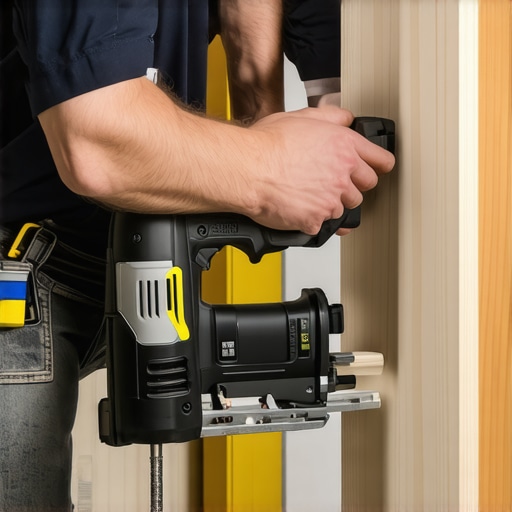
Switch to a fine-toothed saw or jigsaw for smooth, accurate cuts. Follow your marked line carefully; don’t try to force the saw through quickly. My first attempt involved rushing the cut, which resulted in an uneven edge requiring re-cutting. Take your time—use slow, controlled strokes, and periodically check your progress against the wall. For intricate sections, make shallow cuts and remove excess gradually. The key is to stay aligned with your marks; any deviation can cause gaps or binding later.
Test and Refine the Fit
Once you’ve made the cut, place the piece against the wall. It should hug the surface snugly without gaps. In practice, I often do a dry fit, then mark any high spots or tight areas with a pencil. Use a rasp or sandpaper to gently smooth or carve these spots, gradually refining the fit. Remember, a little bit of adjustment can make a huge difference in achieving that seamless look. If needed, re-cut or sand sections incrementally—patience here ensures a professional finish.
Secure and Finalize Your Installation
After achieving a perfect scribe, proceed with fastening the cabinet or vanity. Use appropriate screws and brackets, ensuring structural stability. For added finesse, caulk along the edges for a smooth, finished appearance. My experience with this step confirmed that a well-fitted piece not only looks better but also functions longer, especially when the wall isn’t plumb. For more detailed tips on installation techniques, check out this comprehensive installation guide.
 Many homeowners assume that installing vanities and built-ins is simply a matter of careful measurement and straightforward fastening. However, in my experience, most people overlook critical nuances that can make or break a professional look and long-term durability. One widespread misconception is the belief that standard measurements are sufficient, even on uneven or complex walls. In reality, walls are rarely perfectly plumb, and neglecting this detail often results in gaps, tilting, or sagging over time. Rushing through the installation without accounting for these irregularities can cause the vanity to become unstable or visually unappealing, especially when heavy stone or custom cabinetry is involved. For example, heavy stone vanities are prone to cracking drywall or causing sagging if not properly supported; this isn’t just speculation—studies indicate that improper load distribution significantly shortens the lifespan of bathroom fixtures (source: [Why Heavy Stone Vanities Crack]).
Keeping your custom vanities and storage systems in top shape requires more than just installation know-how—you need the right tools and methods to ensure longevity and functionality. One of my favorite pieces of equipment is a digital angle finder. Unlike traditional bubble levels, a digital angle finder provides precise readings, which is crucial when checking for subtle tilts in floating vanities or ensuring consistent alignment across multiple fixtures. I personally rely on the Johnson Digital Angle Finder because its accuracy within 0.1 degrees allows me to catch minute misalignments that might lead to long-term issues like sagging or uneven surfaces. Regularly using this device during maintenance checks can save you from costly repairs later on.
Another indispensable tool is a high-torque impact driver. When securing built-ins against uneven or brittle wall surfaces, the impact driver’s power ensures your fasteners embed deeply and securely, reducing the risk of loose fixtures over time. I prefer models with adjustable torque settings—this gives me control when dealing with delicate materials like drywall or old plaster, preventing damage while still securing heavy units effectively. Combining this with a set of quality threaded inserts and steel brackets, especially for heavy or bulky installations, guarantees your work remains stable for years.
How do I maintain built-in storage systems over time?
Effective maintenance begins with routine inspections. Check for signs of wear, such as sagging shelves or loose fasteners, every six months. Applying a light coat of furniture-grade wax or a protective sealant helps prevent moisture damage and keeps surfaces looking fresh. Additionally, I recommend using a cordless drill with a powdered steel brush attachment to clean metal components without scratching the finish—this prevents corrosion and ensures structural integrity. For more complex issues like wall anchoring or reinforcement, consulting expert guides such as specialized reinforcement techniques can be invaluable. Regular upkeep combined with proper tools prolongs the lifespan and maintains the aesthetic appeal of your built-ins.
Looking ahead, I predict that smart maintenance devices, like IoT sensors that monitor structural integrity and warn you of shifts or weaknesses, will become more prevalent in home renovation. Embracing such technology now can help you proactively address issues before they escalate, saving time and money.
If you haven’t already, try implementing a digital angle finder during your next adjustment or inspection. Its precision might just reveal tiny misalignments that could lead to larger problems down the road. Keeping your fixtures working perfectly isn’t just about initial installation—it’s an ongoing process, and the right tools make all the difference.

Remember, maintaining your built-ins is an investment in your home’s long-term beauty and safety. Regular checks, quality tools, and proactive repairs ensure your vanity and storage solutions continue to serve you well for years to come.
Reflecting on my journey with built-in vanities, I realize that every project is a lesson in patience and precision. One surprising insight was that walls are often far from plumb—understanding this early saved me countless hours of rework. I also discovered that investing in quality tools like a digital angle finder can dramatically improve the accuracy of your installation, turning a potentially frustrating task into an enjoyable challenge. Most importantly, I learned that embracing the scribing technique transforms uneven surfaces from a headache into a canvas for perfection. These lessons have not only elevated my craftsmanship but also deepened my appreciation for attention to detail in cabinetry work.