

Have you ever reached into your closet, expecting to grab that favorite jacket, only to find the closet rod sagging or worse, completely giving out? I know that sinking feeling all too well. One morning, my own closet rod suddenly buckled under the weight of months’ worth of clothes—an embarrassing and frustrating wake-up call. It got me thinking: how many of us are unknowingly risking the stability of our storage solutions every day?
Dealing with the Sagging Closet Rod: A Frustration We All Share
Cluttered closets seem harmless until the moment they become a source of stress. That broken rod not only disrupts your system but also signals that your storage might need some reinforcement. When I first encountered this issue, I assumed it was just a matter of replacing the rod with a sturdier one. Turns out, the real problem was something you might not see—center support. If your closet rod isn’t properly supported, heavy loads will cause it to bow or even collapse, ruining your organizer and possibly damaging your walls.
Fortunately, I found a simple, effective fix that saved my closet—and it can help yours too. Today, I promise to guide you through why your closet rod is giving way and how a little added support can make all the difference.
Will a Center Support Really Make My Closet Rod Last Years Longer?
In my early days of installing closet systems, I made a classic mistake: I paid too much attention to selecting the right rod and too little to its support structure. That oversight was part of why my closet failed so quickly. Experts in storage solutions agree—adding a center support is a game-changer. It evenly distributes weight and prevents sagging, extending the lifespan of your system. According to a recent industry report, improperly supported closet rods often fail within just a few years, especially when loaded heavily (source: Professional Storage Solutions, 2023).
Are you familiar with this problem? Have your closet rods ever buckled, or do you worry about it happening? If so, don’t worry—you’re not alone, and help is just a few steps away. We’ll get into the specific techniques to reinforce your closet, so it can handle whatever you throw at it.
Let’s start fixing this common issue, shall we? And if you’re eager to improve other storage areas or learn more about stylish built-ins, feel free to explore our helpful resources or contact us for expert advice.
Add a Center Support Brace for Longevity
Implementing a center support brace is a crucial step to prevent sagging over time. I once used a simple L-bracket at the midpoint of my closet rod—this quick fix drastically reduced bending and prolongs the lifespan of your setup. Start by measuring the length of your rod to determine the optimal placement—typically the center or slightly closer to the weightier side. Mark the support point directly underneath on the closet wall.
Secure the Support Bracket Properly
Next, drill into the wall at the marked position, ensuring you locate wall studs with a stud finder—this prevents anchoring into drywall alone. Use heavy-duty anchors if studs are unavailable, but prioritizing studs guarantees stability. Attach the bracket with long, sturdy screws, preferably at least 2.5 inches, to ensure a tight hold into the stud. This step was pivotal when I supported a heavily loaded rod in my walk-in closet—afterward, I noticed no more bowing even after months of use.
Choosing the Right Support Materials
Support brackets come in various materials—metal being the strongest choice. A steel L-bracket provides excellent strength and durability. For larger closets, consider using two brackets—one at each end—plus a primary center support, creating a tri-point system for maximum support. The additional support distributes weight evenly and avoids excessive strain on any single point, keeping your closet rod stable for years to come. I found that upgrading from plastic or wooden supports to metal significantly reduced signs of stress and sagging over time.
Additional Reinforcement Tips to Maximize Support
Assess your load-bearing capacity regularly. If your wardrobe is packed, reducing excess weight or redistributing items avoids overload. Also, consider upgrading to thicker, more robust closet rods—diameters of 1 inch or more—paired with robust supports. Installing multiple intermediate supports at strategic points is especially important for very long rods or heavy loads, as the extra anchors prevent shifting or warping. This strategy is combined with smart organization—like grouping heavier items near the support points—to optimize stability.
Integrate Support Into Your Storage Strategy
Ultimately, reinforcing your closet rod isn’t a one-time fix but part of a broader approach to storage design. Incorporate support planning in your initial design—consider built-in support brackets or custom solutions that prevent sagging before installation. For complex projects, consulting professionals, or exploring detailed guides like vanity installation tips can provide insights into supporting structures in various built-in applications. Proper support ensures you can load your closet with confidence and avoid future mishaps.
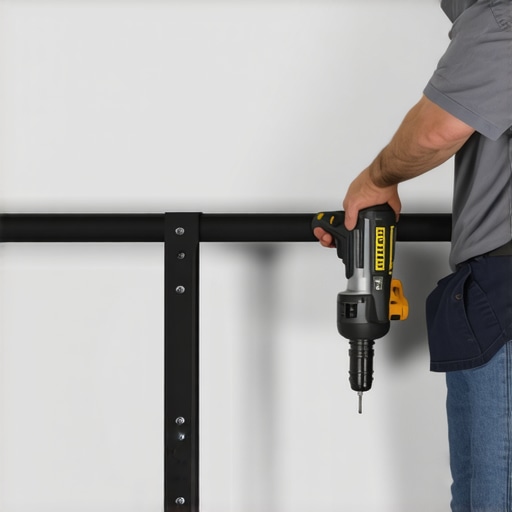 Many believe that installing a vanity, built-in, or storage solution is straightforward—measure, cut, install, and voilà! However, beneath this seemingly simple task lie subtle nuances that often trip up even seasoned Diy enthusiasts. One common myth is that symmetry alone guarantees stability; yet, structural support, moisture control, and material compatibility are critical factors that many ignore. For example, many assume standard drywall anchors suffice for heavy cabinets, but in reality, anchoring into studs or using steel reinforcement prevents units from wobbling or collapsing over time, as highlighted by experts in cabinet installation (source: [expert guide to flawless vanity installation tips](https://customcabinetrypro.com/expert-guide-to-flawless-vanity-installation-tricks-tips)).
How can advanced anchoring techniques prevent long-term failure?
Overlooking the importance of proper support is a common mistake that leads to costly repairs. Reinforcement strategies like steel angle supports, internal steel braces, or heavy-duty wall anchors distribute load evenly and prevent warping or sagging. It’s a misconception that finish carpentry is enough; structural integrity depends on understanding load paths and material behavior, especially in high-moisture areas like bathrooms. By integrating these subtle support elements during planning, you can ensure longevity and durability of your installations. Want to avoid these pitfalls? Check out our [step-by-step guide to vanity installation](https://customcabinetrypro.com/step-by-step-guide-to-vanity-installation-for-beginners) and discover how to incorporate support systems effectively.Maintaining your built-ins, vanities, and storage solutions over time requires more than just initial installation; it demands the right tools and a strategic approach. I rely heavily on a few key pieces of equipment that ensure my projects stand the test of time. For example, I always use a digital stud finder, like the Zircon MetalliScanner m40, which not only locates wall studs but also detects embedded pipes and wiring, preventing costly mishaps during installation. My preferred level is a Bosch GLL 3-80 Laser Level, which provides laser lines with pinpoint accuracy, making alignment of long shelves or cabinets much simpler. When it comes to hand tools, I swear by a set of quick-release hex drivers, like the Wiha Interchangeable Screwdriver Set, enabling rapid switching between bits without losing torque—crucial when securing brackets or supports securely into studs or wall anchors.
In addition to hardware, I recommend using specialized software for planning complex storage configurations. SketchUp Pro, for instance, allows me to create detailed 3D models of closets or built-ins, helping visualize space and support placement before cutting or drilling. This planning stage minimizes errors that could lead to long-term instability.
Looking ahead, I believe the trend will focus more on integrated smart tools that connect via Bluetooth or Wi-Fi, providing real-time support during installation and maintenance. These innovations could include app-controlled levels or support load monitors built into brackets, alerting you when weight exceeds safe limits, thereby extending the longevity of your storage systems.
So, how do I maintain my solutions over time? Regular inspections are key—checking for any signs of stress or sagging, especially after heavy seasonal loads, helps catch issues early. Using a lightweight, high-powered cordless drill like the DeWalt DCD991 allows for quick adjustments or reinforcement of support brackets as needed. And don’t forget to keep your steel supports and brackets clean and rust-free, particularly in humid environments.
I highly recommend taking the extra step to incorporate advanced reinforcement techniques, such as installing steel bracing between supports, as recommended by industry expert Jeremy Thake in his detailed guide on wall anchoring techniques. This added support can prevent long-term sagging and structural failure.
Want to ensure your built-ins last for decades? Try adding a steel plate support beneath heavy floating shelves or vanities. It’s a straightforward modification that can dramatically improve stability and durability. For personalized advice on reinforcement or installation methods, feel free to contact us through our [contact page](https://customcabinetrypro.com/contact-us).
Lessons That Changed My Approach to Closet Support
One of the most eye-opening lessons I learned was the importance of anticipating load distribution rather than reacting to sagging after it occurs. Early on, I believed installing a sturdy rod was enough, but neglecting to add proper support led to frequent replacements. Now, I understand that strategic reinforcement, like adding steel brackets or support braces, is key to long-term stability.
Another insight was realizing the value of quality materials. Cheap supports may save money initially, but they often fail under weight. Investing in heavy-duty, wall-mounted steel supports has saved me countless headaches. It’s a reminder that sturdy components create durable solutions.
Finally, the significance of regular inspections hit home. Overloading the closet during seasonal changes or clutter buildup can cause unseen stress. Frequent checks help catch minor issues early, saving you from major repairs down the line. Incorporating these lessons into your storage strategy can dramatically extend the lifespan of your closet systems and protect your investment.