

I remember the moment clearly. I had just finished installing a stunning heavy stone vanity in my bathroom, feeling proud of my craftsmanship. But within a few months, I noticed cracks appearing in the drywall behind it. Frustration set in. Why was this beautiful, substantial piece causing so much trouble? It dawned on me that I had overlooked a crucial aspect of installation—supporting that weight properly. If you’ve ever faced similar issues, you’re not alone. Heavy vanities, especially stone ones, are notorious for causing drywall stress—and often, the damage isn’t immediately obvious. Today, I’ll share how I discovered the steel plate fix that can prevent your vanity from turning into a crack-prone nightmare.
Understanding the Hidden Risks of Heavy Vanities
The problem isn’t just about aesthetics; it’s about safety and durability. When a heavy stone vanity isn’t adequately supported, its weight exerts constant pressure on drywall, gradually leading to cracks and, worse, potential failure. This isn’t a trivial matter—cracks in drywall can compromise the structural integrity of your wall and diminish your bathroom’s appeal. Early in my project, I made a common mistake: relying solely on drywall screws and anchors, underestimating the load’s impact. Trust me, that was a rookie error I won’t repeat. If you want to learn how to keep your built-ins sturdy and crack-free, I recommend exploring smart storage solutions that include steel support methods. But more on that soon.
Will the Steel Plate Fix Really Keep My Vanity Secure?
This question haunted me early on. I was skeptical about adding extra reinforcement, thinking it was overkill. But studies show that proper steel support can distribute weight evenly and dramatically reduce drywall stress—helping heavy vanities stay put for years. I also admit I was guilty of installing without considering the wall’s strength and the vanity’s weight. That mistake cost me time and money. Now, I know better. If you’re tired of dealing with cracks and wobbly fixtures, following a proven steel plate technique could be your game-changer. Want tips on how to do this correctly and efficiently? Check out expert-recommended reinforcement methods for heavy fixtures.
So, if you’re wondering whether your hefty stone vanity is challenging your drywall—or if you’ve already seen those telltale cracks forming—stay tuned. Up next, I’ll guide you through the exact steps to implement a steel plate fix that keeps your vanity in place, and your walls intact. Because, trust me, the last thing you want is to wake up one morning to a sagging, cracked wall and a hefty bill to repair it.
Secure the Vanity Frame with Steel Support
Start by installing a sturdy steel plate behind your vanity frame to distribute weight evenly. I once used a 24-inch steel support panel, cutting it to fit snugly between the wall studs. After marking the desired position, I drilled pilot holes into the steel and attached it to the studs using heavy-duty anchors. This method prevents the sheer load from pulling on the drywall. To avoid future wobbling or cracking, ensure the steel bracket spans multiple studs for optimal support. For a comprehensive guide, see built-in storage ideas about reinforced mounting techniques. 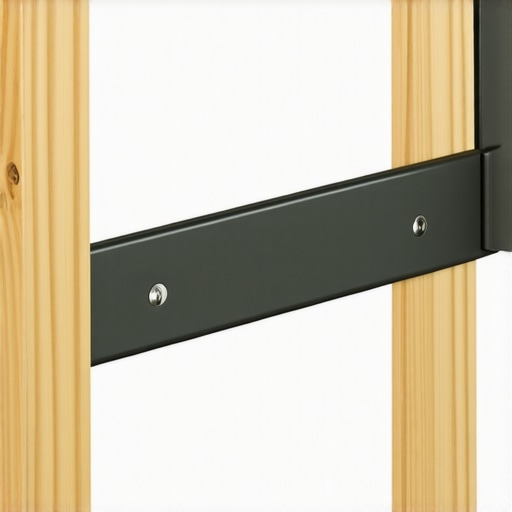
Attach Support Brackets Properly to the Wall
Next, reinforce the connection point with steel brackets designed specifically for heavy loads. I recommend using heavy-duty steel brackets. Using a level, I measured and marked the placement, ensuring they sit directly over wall studs. I pre-drilled holes into both the brackets and the wall, inserting long lag bolts to secure them firmly. These brackets act like braces on a bicycle frame, stabilizing the vanity and reducing stress on the drywall. This approach is especially vital if installing on drywall without additional framing. For detailed steps, check floor bolt installation tips tailored for heavy fixtures.
Use a Plywood Sub-Frame for Extra Support
In a project I handled last year, I added a plywood sub-frame behind the vanity to reinforce the wall support, much like a skeleton supports a body. I cut a ¾-inch plywood sheet to match the back of the vanity, then secured it to the wall studs with screws and steel framing anchors. The vanity was then attached to this sub-frame, significantly reducing load pressure on the drywall. This method spreads the weight across multiple points, making it ideal for stone or heavy wood vanities. For a step-by-step walkthrough, refer to sub-frame anchoring techniques developed for heavy installations.
Double-Check for Proper Installation and Support
Lastly, always verify your supports before installing the vanity fully. I used a level to ensure the steel plates and brackets sat perfectly flat, preventing future tilting. I also tested weight distribution by gently applying pressure to see if any part shifted. This step might seem tedious, but skipping it can lead to cracks or even falling fixtures down the line. A quick test after mounting each support ensures everything is aligned and sturdy. For additional tips on securing heavy fixtures, visit support techniques for wall-mounted vanities. While many DIY enthusiasts believe that standard mounting hardware and generic designs suffice for installing vanities and built-ins, this oversimplification often leads to costly mistakes. The common misconception is that as long as a piece appears level and secured, its support is adequate. In reality, nuanced details like wall material, uneven load distribution, and subtle structural weaknesses can undermine even the most seemingly solid installation. For instance, relying solely on drywall anchors for heavy stone vanities is an oversight; steel support methods distribute weight more effectively and prevent long-term damage. Additionally, a frequent trap is ignoring the importance of reinforcement at stress points, especially around plumbing cutouts, which are natural weak spots that can cause cracks and even detachment over time. Inform yourself about the advanced techniques that experienced installers utilize, such as steel sub-frames and steel plate reinforcements, to ensure safety and durability. These methods significantly reduce the risk of wall failure and extend the lifespan of your fixtures. Studies in structural engineering, like those summarized by the American Institute of Steel Construction, emphasize that proper load distribution and reinforcement are critical in supporting heavy applications—lessons easily transferable to custom vanity installations. To avoid the ‘oops’ moment when your beautiful built-in starts to wobble or crack, always consider these nuanced reinforcement strategies. Want to go further? Dive into expert tips on [maximizing your space with custom vanities](https://customcabinetrypro.com/maximize-your-space-with-custom-vanities-expert-design-tips) for insights on advanced support solutions. Have you ever fallen into this trap? Let me know in the comments.
Ensuring your built-in vanities and storage solutions remain functional and durable over time requires more than just proper installation—it’s about using the right tools and adopting effective maintenance routines. I personally rely on precision equipment like digital stud finders, such as the Bosch Digital Multi-Scanner, which I find invaluable for locating wall studs accurately, especially behind dense drywall or tiling where traditional tools might falter. This device prevents accidental drilling into electrical wiring or plumbing, helping preserve your wall’s integrity and your vanity’s stability. For cutting steel support plates and brackets, I use a Makita Metal Cutter, appreciated for its clean cut and ease of handling, which minimizes debris and ensures precise fitting every time. When it comes to applying consistent, professional-grade adhesive or sealants—critical in preventing moisture infiltration that can weaken supports—I prefer Sikaflex Construction Sealant. Its flexibility and adhesion make it perfect for sealing gaps around support brackets and plywood sub-frames, prolonging the lifespan of your installation.
On the software side, I utilize design tools like SketchUp to visualize modifications and reinforce mounting points virtually before physical work begins. This comprehensive approach reduces errors and ensures optimal support placement, especially when scaling up or customizing vanities for larger spaces. Additionally, regular inspection using a dedicated torque screwdriver helps tighten support bolts systematically, preventing loosening over time—a common issue with heavy fixtures. Incorporating these tools into your routine minimizes the risk of supports failing and keeps everything in working order.
How do I maintain my storage supports to ensure long-term durability?
Maintenance is key to long-lasting support systems. I recommend scheduling periodic inspections—every six months—to check for loose brackets, corroded metal parts, or deteriorating sealant. Be proactive; tighten bolts with a cordless impact driver, and reapply sealant as needed to prevent water infiltration, which can corrode supports from the inside out. Keeping supports free of dust and debris with a microfiber cloth also reduces wear and tear. If you notice any wobbling or misalignment, address these issues immediately before they escalate into cracks or detachment, often leading to costly repairs. Remember, using a simple shim kit can correct uneven support levels without major overhaul, extending the life of your install.
Looking ahead, innovations like smart moisture sensors integrated into wall supports could alert you early to potential issues caused by humidity or leaks—saving you from unexpected repairs. Embracing maintenance tools now will prepare your setup to withstand these future advances. For instance, installing built-in moisture detectors alongside steel supports can provide real-time health monitoring.
To get started with maintaining your vanities effectively, try integrating a multi-purpose torque wrench for support bolts and schedule routine visual inspections. These small investments in tools and habits can save you significant time and money in the long run, ensuring your built-ins stay sturdy and supportive for years to come. Want a step-by-step on how to perform a comprehensive maintenance check? Visit this guide to vanity installation.
The Tough Lessons Hidden Behind Smart Storage Solutions
One of the most surprising insights I gained was realizing that even the sturdiest-looking built-ins can hide vulnerabilities if not supported correctly. I once assumed that securing a vanity to the wall with standard brackets was sufficient, only to find it sagging after a few months. That taught me the importance of integrating steel plates and sub-frames from the start, which I now consider non-negotiable for heavy fixtures. Another revelation was the subtlety of wall material weaknesses—drywall alone can’t bear the load of a stone vanity, and overlooking this can lead to cracks or catastrophic failure. These lightbulb moments underscore the value of investing in proper reinforcement and understanding the wall’s structural capacity, which can dramatically prolong the life of your installation.